Beyond Decoration: The Architecture of Interiors
- Beniamin Mascovici

- Aug 18
- 3 min read
Updated: Aug 29

Interiors are often mistaken for decoration. A layer of color. A choice of furniture. A collection of finishes. Nice to have — but not structural. At ABM, we reject that idea. Interiors are not the afterthought. They are architecture in its most human form: the scale you live with every day, the framework that sets rhythm, behavior, and atmosphere. If the façade is the first impression, the interior is the lasting one.
To us, interiors are not style. They are structure in motion.
Interiors as Architecture, Not Afterthought
Step into any space, and within seconds you’ll feel its intent — whether it’s buzzing with energy or wrapped in calm. That impression doesn’t come from décor. It comes from architecture working on the inside.
Circulation directs behavior. Tight corridors push you forward. Expansive atriums hold you still. Interiors tell you how to move before you’ve even made a choice.
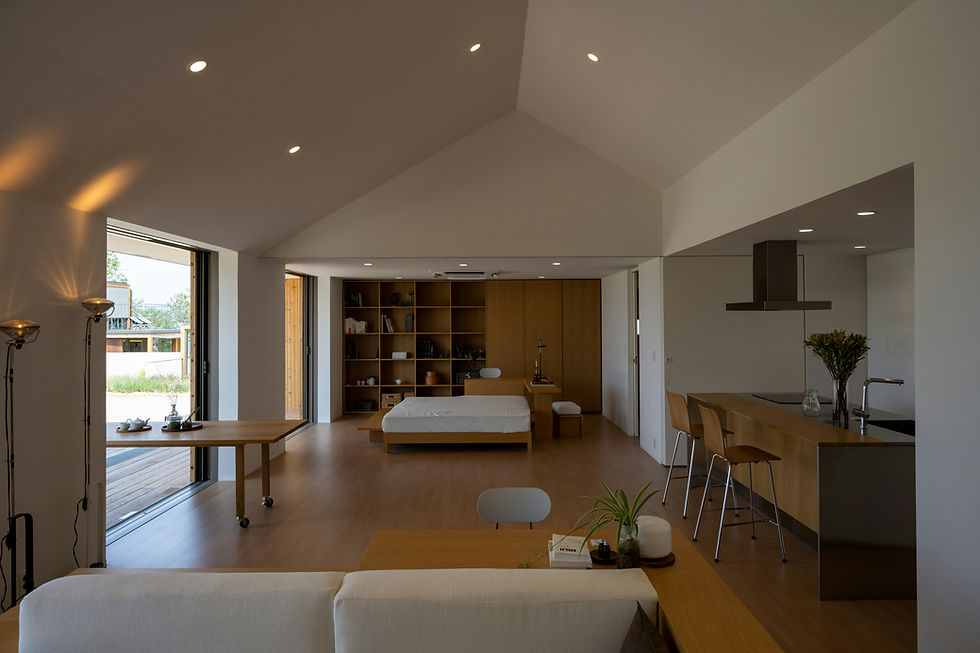
Proportions shape posture. A vaulted ceiling lifts your gaze and your thoughts. A compressed one asks for intimacy, reflection, focus.
Light sets rhythm. A room that catches shifting daylight has pulse. A room without it falls flat.
When interiors are reduced to decoration, they become stage sets. When treated as architecture, they become choreography.
The Rhythm of Interiors
What gives an interior its groove isn’t wallpaper or a palette. It’s rhythm: the orchestrated balance between flow, material, and light.
Contrast adds tempo. Rough stone against polished glass creates tension. Tension creates energy.
Circulation creates movement. Curved staircases, angled corridors, playful junctions — these are invitations to explore.
Material mashups add syncopation. Wood softens steel. Concrete grounds glass. The unexpected mix makes a space feel alive.
Interiors that move us don’t just look good — they feel good. They change how we interact with one another, how long we stay, how often we return.

Funk with Purpose
We call it funk not because it’s frivolous, but because it resists stagnation. Funky interiors provoke. They keep people awake, alert, engaged.
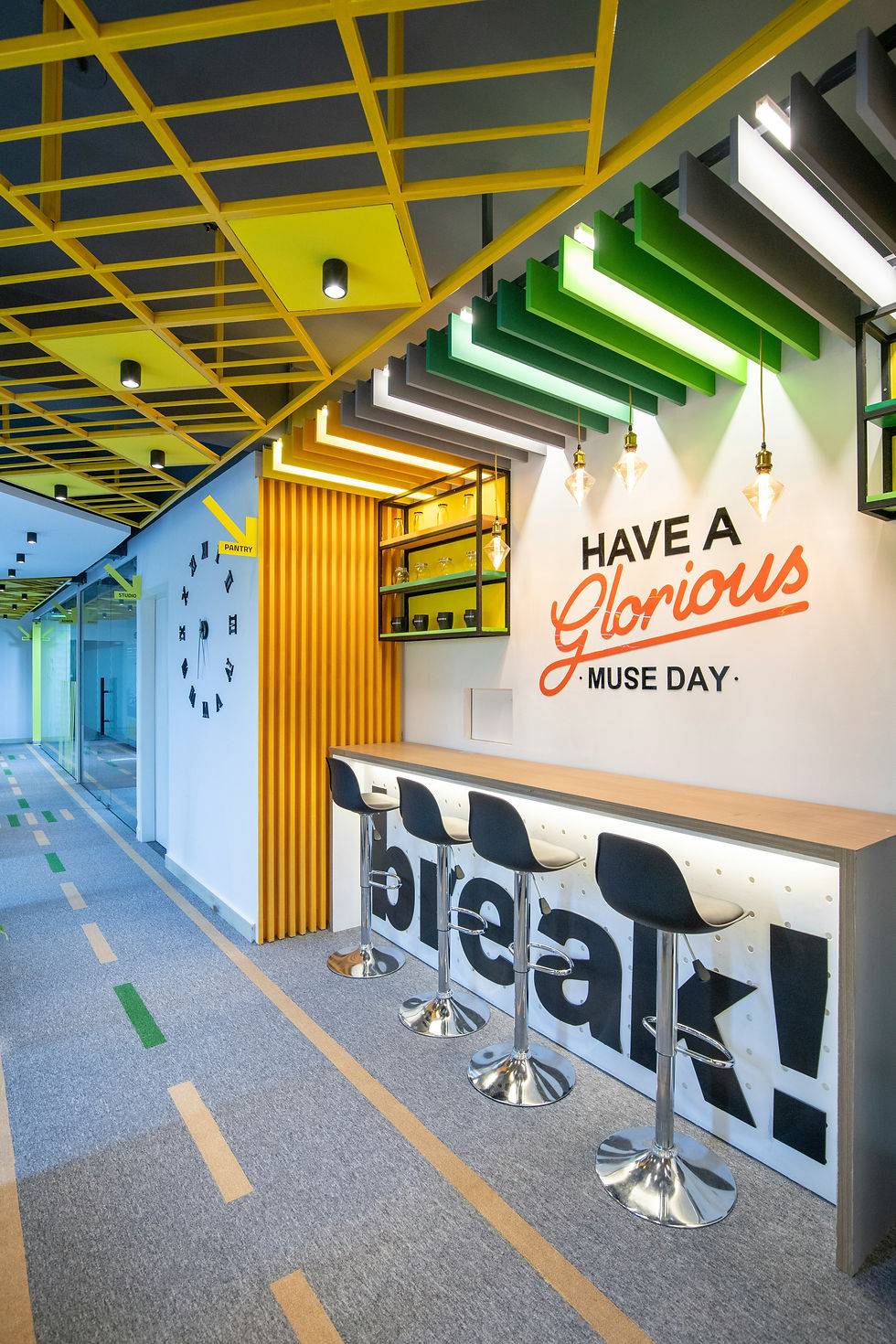
In the workplace, funky interiors break monotony and encourage collaboration.
In homes, they spark joy and individuality.
In public spaces, they make people linger instead of passing through.
Funk is not surface dressing. Funk is function at its most alive.
Interiors as Instruments
At ABM, we design interiors as if they were instruments:
Walls as bass lines. They set the framework and define the rhythm of space.
Windows as percussion. Openings punctuate movement and shape mood.
Furniture as melody. Placement creates harmony or dissonance, depending on arrangement.
The point is simple: interiors don’t sit still. They play back.
A Case in Point: Offices That Move
Consider the conventional office grid: endless rows of desks, uniform lighting, sterile corridors. It is efficient but uninspired. Static by design.
Now consider an office planned with movement in mind. Circulation loops create chance encounters. Breakout spaces invite informal conversation. Natural light changes across the day, altering the tempo of the workplace. This is not interior styling. This is architecture designed for human interaction.
Why This Matters
Because static spaces produce static behavior. Interiors that lack rhythm leave people disengaged, tired, uninspired.
But interiors with movement — interiors composed like music — can energize, restore, and transform.
That is why at ABM, interiors are not decoration. They are architecture made personal, experiential, alive.
The future of interiors is not about trends or surface finishes. It is about spaces that respond, adapt, and endure.
At ABM, we ask one question of every project: How should this space move people?
Because when interiors move, so do we.